Magic Tiles 3™ - Piano Game
AMANOTES PTE. LTD.Music
4.6111.40K Reviews
- Version
- 13.084.006
- Installs
- 500.00M
- Age Rating
- Everyone 10+
Screenshots







Our Review of Magic Tiles 3™ - Piano Game
 Analysis by Appyee
I see Magic Tiles 3™ as a quick-reflex rhythm game, not a shortcut to learning piano. Its appeal is the satisfying little challenge of keeping time while tiles rush toward you, with songs and competitive modes giving each run a reason to continue. That makes it easy to pick up during a spare moment, though its speed and restart-after-a-miss structure can feel unforgiving when I want a more relaxed music game.
What the tapping loop does well
The basic idea is immediately clear: tap the tiles as they move down the screen and keep your timing steady. That simplicity is a strength on a phone, where there is no lengthy setup before a round. The difficulty comes from maintaining accuracy as the pace rises. I enjoy that pressure when I’m focused, but it also means this is a game of quick reactions rather than a gentle way to listen to music.
That distinction matters if you’re hoping to learn melodies or practice real keyboard technique. The game asks you to respond to on-screen cues; it does not replace lessons or teach the physical skills of playing a piano. I’d choose it for a short burst of concentration, not as a music-learning tool. For someone who mainly wants to hear complete songs without tapping, a music player is a better fit; for someone who wants to improve at an instrument, a structured learning app or a real keyboard makes more sense.
The music selection is one of the reasons I keep coming back. I can switch between different musical styles rather than being locked into one narrow mood, and the changing tracks help the tap pattern feel less repetitive. Still, liking a song does not automatically make its chart comfortable: faster sequences can turn a familiar tune into a demanding coordination test. I treat a new track as a chance to learn its rhythm, not as a promise that I’ll clear it on the first attempt.
Why a quick session can turn competitive
The menu is straightforward, and the uncluttered presentation keeps my attention on the tiles. That is useful when I’m playing on a small screen or squeezing in a round between other tasks. Leaderboards give a solo session a personal target, while the Battle Mode described in the game adds a direct contest against another player. I like having both options: I can work on my own consistency when I want a calmer challenge, or take a more competitive run when I’m in the mood to test myself.
There is a practical trade-off to that competition. A score chase can make a quick break last longer than planned, especially when I’m close to beating a friend’s result. I get the most enjoyment by deciding on a stopping point before I start, such as playing a couple of rounds rather than chasing every leaderboard position. That small habit keeps the game fun instead of turning a casual session into an unplanned time sink.
Band Mode broadens the musical feel by letting me play instruments beyond piano, which gives the game another way to vary a session. Weekly events and updates also offer reasons to revisit it. I wouldn’t assume every event or track will suit my taste, though; the useful point is that the experience has more variety than repeating one identical piano pattern. If I’m trying a new instrument mode, I give myself a few attempts to adjust rather than judging it by the first run.
Where it fits in a music-game collection
Compared with a conventional rhythm game built around a broader set of controls or a more relaxed listening experience, this one stays focused on tapping tiles and reacting quickly. That narrow focus is its clearest strength: I can understand what a round asks of me almost instantly. It is also its main limitation. Players who want a detailed music sandbox, a long-form story, or a low-pressure way to enjoy tracks may prefer another kind of game. I recommend it most to people who like score-chasing, quick retries, and rhythm challenges that reward attention.
For an everyday example, I might open it while waiting for a coffee or during a short break, choose a track that suits my mood, and play one focused round. If I’m tired, distracted, or carrying something in one hand, I skip it: the game is much less enjoyable when I can’t give the screen and timing my attention. Playing somewhere noisy can also make it harder to follow the music, so I rely on the visual rhythm rather than expecting the soundtrack alone to guide every tap.
A useful approach for a difficult song is to prioritize clean timing over frantic tapping. When the pattern speeds up, tapping too early or trying to compensate for a missed beat can throw off the next few moves. I slow down mentally, watch the incoming tiles, and treat each attempt as practice in reading the pattern. This is more helpful than repeatedly rushing through a song and hoping speed alone will solve it. The game’s restart pressure is part of the challenge, but it can frustrate anyone who prefers generous recovery or a more forgiving practice mode.
The Rhythm of the Game
Magic Tiles 3™ is all about timing and rhythm. The premise is simple: tap the tiles as they scroll down your screen. Miss a tile, and it's game over. Sounds easy, right? Well, not quite. As you progress, the songs get faster, and the tiles seem to come at you like they have a vendetta.
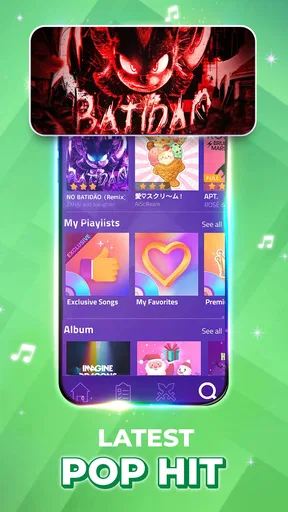
What really hooked me was the variety of songs available. Whether you're into pop, classical, or even some jazz, there's something for everyone. The developers have done a fantastic job at keeping the playlist fresh and exciting. I found myself saying, "Just one more song," more times than I'd like to admit.
Aesthetic and User Experience
The user interface of Magic Tiles 3™ is sleek and intuitive. The game is visually appealing, with a minimalist design that doesn't distract from the gameplay. I appreciated the smooth transitions and animations that made the experience feel seamless.
Navigating through the app is a breeze. The menu is straightforward, and I never felt lost. They even have a leaderboard feature, which adds a competitive edge. I may or may not have spent too long trying to beat my friend's high score.
Features That Stand Out
One of the standout features is the Battle Mode, where you can challenge other players online. It's thrilling to go head-to-head with someone else, and it definitely adds a new layer of excitement. I found myself getting competitive, trying to outplay my opponents.
Magic Tiles 3™ also offers a Band Mode, allowing you to play instruments other than the piano. It's a nice touch, and it gives the game more depth. Plus, with the weekly updates and events, there's always something new to explore.
Who I’d recommend it to
Music-game fans who want a fast, tactile challenge are the natural audience. It works especially well for short sessions because the objective is obvious, the menus are easy to navigate, and a round asks for attention without demanding that I settle in for a long story. I’d also suggest it to friends who enjoy comparing scores: the leaderboard and Battle Mode give them a shared target beyond simply finishing a song.
The game is free to download, with optional in-app purchases ranging from $0.99 to $49.99 per item. I’d start without spending and see whether the available play suits me first. Purchases are a consideration for anyone trying to keep entertainment costs predictable, particularly if a competitive streak makes extra content tempting. The game is rated Everyone 10+, so parents should consider that age guidance when deciding whether it fits a younger player.
It comes from AMANOTES PTE. LTD. and has a 4.6 average from around 3.4 million ratings, alongside roughly 109,000 written reviews. More than 500 million installs suggest that the quick-tap format has reached a very broad audience, though popularity alone doesn’t guarantee it will match your taste. Its current version is 12.116.201, and it requires Android 7.0 or later. Those details are useful when checking whether it fits your device, while the practical test is whether you enjoy reacting to fast visual prompts.
If you’re wondering whether an internet connection is needed, I wouldn’t plan a session around being offline without checking the specific mode you intend to use. Solo tapping and online competition are different kinds of play, and Battle Mode is explicitly an online contest. I’d use the competitive option when I have a reliable connection and keep a solo session for a quieter moment. That distinction makes it easier to choose the right mode rather than discovering a connection issue after deciding to challenge someone.
Likewise, I’d treat the range of music as a strength without assuming every song will be available in every mood or at every difficulty. A track that catches my ear may still demand more coordination than I want at that moment. When I’m tired, I choose a less intense session or close the game; when I want a test, I pick a challenging run and accept that repeated attempts are part of the appeal. The best experience comes from matching the game’s pace to my attention, not forcing it into every spare minute.
Final Thoughts
Overall, Magic Tiles 3™ is more than just a game; it's an experience. It combines music, rhythm, and a touch of competition in a way that's both engaging and exhilarating. Whether you're a music lover or just looking for a fun way to pass the time, I highly recommend giving it a try. Just be warned — you might find yourself tapping away for hours on end!
Ready to unleash your inner musician? Grab your phone, download Magic Tiles 3™, and let the music take over!
Privacy and Permissions
See what permissions an app requests and how it handles your data.
- Wi-Fi connection information
- view Wi-Fi connections
- Other
- view network connections, full network access, change your audio settings, control vibration, prevent device from sleeping, read Google service configuration
Verdict
Strengths of Magic Tiles 3™ - Piano Game
- Engaging gameplay with diverse music genres.
- Regular updates with new songs added.
- Smooth and responsive touch controls.
- Offline mode available for uninterrupted play.
- Attractive and clean user interface.
Limitations of Magic Tiles 3™ - Piano Game
- Contains ads that can interrupt gameplay.
- In-app purchases required for full access.
- Can be challenging for beginners.
- Limited free song selection.
- Requires internet connection for some features.
Other Releases by AMANOTES PTE. LTD.
View All
Tiles Hop Music & Ball Game
Music4.3

Dancing Road Color Balls Match
Arcade4.6

Duet Cats: Music & Meow Game
Casual4.4

Beat Jumper: EDM up
Music4.4
Similar Picks in This Category
View AllTiles Hop Music & Ball Game
AMANOTES PTE. LTD.4.3

Real Piano
Bilkon3.7

Piano Game: Classic Music Song
Dream Tiles Piano Game Studio4.0

Smash Colors: Music Ball Rush
BADSNOWBALL HONGKONG LIMITED4.2

Piano Music Go-EDM Piano Games
Joy Journey Music Games4.5

Piano Fire: Edm Music & Piano
Adaric Music4.6
You May Also Like
View All

Frequently Asked Questions
What is Magic Tiles 3™ - Piano Game?
Magic Tiles 3™ is a popular rhythm-based game that combines fast-paced piano music with interactive gameplay. Players must tap black tiles as they appear on the screen, avoiding any other tiles, to play songs and achieve high scores. It offers a variety of songs across different genres, making it engaging for music lovers.
Is Magic Tiles 3™ free to play?
Yes, Magic Tiles 3™ is free to download and play. However, it includes optional in-app purchases that can enhance the gaming experience. These purchases might offer features such as ad removal, additional songs, or special bonuses. Players can enjoy the core game without spending money, though in-app purchases can provide extra content.
What are the key features of Magic Tiles 3™?
Magic Tiles 3™ offers a wide selection of songs from various genres, including classical, pop, and rock. The game features a multiplayer mode, allowing players to compete with friends. It also includes daily challenges and the ability to unlock new songs as players progress. The intuitive controls make it accessible for all ages.
Can I play Magic Tiles 3™ offline?
Magic Tiles 3™ requires an internet connection for certain features, such as downloading new songs and accessing online multiplayer modes. However, some songs and features can be enjoyed offline once they have been downloaded. Players should ensure they are connected to the internet to get the full experience of the game.
Is Magic Tiles 3™ suitable for children?
Magic Tiles 3™ is suitable for children, offering a fun and educational gameplay experience. The game helps improve hand-eye coordination and rhythm skills. However, parents should be aware of in-app purchases and online interactions. It’s advisable to supervise younger children to ensure a safe and enjoyable gaming experience.
Play our best games!


